
Skin of color can be more prone to lingering dark spots, post-acne marks, uneven tone, and pigmentation after irritation or inflammation. At Viviane Aires Skin Wellness in Philadelphia, care is personalized around your skin tone, sensitivity, barrier health, acne history, and goals – not a one-size-fits-all routine.
If you have melanin-rich skin, you may notice that a breakout, irritation, or inflammation can leave a visible mark long after the original concern has improved.
That does not mean your skin is difficult. It means your skin may need a more thoughtful approach that considers how pigmentation, sensitivity, and barrier health respond over time.
At Viviane Aires Skin Wellness, treatment is tailored to what your skin is experiencing now. Whether you are dealing with dark spots, acne marks, sensitivity, uneven tone, dryness, texture changes, or visible signs of aging, the goal is to understand your skin first and choose the most appropriate next step.
What Does “Skin of Color” Mean?
“Skin of color” is a broad term used to describe people with more richly pigmented skin tones, including many Black, Brown, Asian, Latino, Middle Eastern, Indigenous, Mediterranean, and multiracial individuals.
But skin tone alone does not define your skin type.
You may have melanin-rich skin and still experience:
That is why treatment decisions should not be based on complexion alone.
A better approach considers how your skin behaves, what concerns you most, what you use at home, your barrier condition, and how your skin has responded to previous treatments.

Why Melanin-Rich Skin May Need a More Thoughtful Approach
Melanin gives skin its color, but inflammation can sometimes leave more visible pigmentation behind in darker skin tones.
A pimple, rash, irritation, or injury may leave a dark mark even after the original problem has improved.
Because of this, stronger is not always better.
Aggressive exfoliation, repeated irritation, or using too many active ingredients at once can sometimes make pigmentation harder to manage.
The goal is not to avoid effective treatments. It is to choose the right treatment, intensity, and timing for your skin.
Common Skin Concerns in Skin of Color
Hyperpigmentation & Dark Spots
Dark spots and uneven pigmentation are common concerns in melanin-rich skin.
A breakout, irritation, or inflammation may leave a mark that stays visible long after the original trigger is gone.
If this sounds familiar, start with the Dark Spots & Hyperpigmentation guide.
The first step is understanding what is causing the pigmentation.
If acne is still active, for example, focusing only on fading marks may not be enough because new breakouts can continue creating inflammation.
Acne & Post-Acne Marks
Acne and pigmentation often appear together.
You may notice that the breakout disappears, but the dark mark stays.
That is why acne care should consider both active breakouts and the marks that follow them.
If recurring breakouts are your main concern, visit Acne & Breakouts.
Picking, squeezing, or repeatedly irritating the skin can also increase the chance of lingering marks and scarring.
Melasma & Uneven Skin Tone
Melasma can appear as areas of uneven pigmentation and may be influenced by hormones, sunlight, visible light, and other factors.
In melanin-rich skin, irritation can sometimes make uneven tone more noticeable.
If pigmentation is persistent, changing, or difficult to manage, a dermatologist may be the right professional to involve.
Sensitive or Reactive Skin
Melanin-rich skin can also be sensitive.
You may notice:
If your skin frequently reacts to products or treatments, visit the Sensitive Skin guide.
Sometimes the best next step is not adding another active ingredient. It may be simplifying your routine and supporting your skin barrier first.
Uneven Skin Texture & Scarring
Texture concerns can include roughness, congestion, post-acne texture, enlarged-looking pores, or scars.
It is also important to understand that a dark mark and a scar are not the same thing.
A flat area of discoloration after acne is often pigmentation, while a true scar usually involves a change in skin texture.
If texture is your main concern, visit Uneven Skin Texture.
Fine Lines, Wrinkles & Skin Changes After 40
Melanin-rich skin can also experience dryness, dullness, fine lines, texture changes, loss of firmness, and menopause-related skin changes.
These concerns should be approached based on your skin’s current condition rather than using a one-size-fits-all anti-aging routine.
Explore:

What Should You Avoid If You Have Melanin-Rich Skin?
You do not need a long list of restrictions, but some habits may create unnecessary irritation.
Be cautious with:
This does not mean you must avoid exfoliation or corrective treatments.
It means they should be chosen and introduced appropriately for your skin.


Can Skin of Color Get Chemical Peels?
Yes. Chemical peels can be appropriate for some people with melanin-rich skin.
However, peel type, strength, preparation, aftercare, and your individual pigmentation history all matter.
Not every peel is appropriate for every person.
At Viviane Aires Skin Wellness, treatment selection is based on your skin condition, sensitivity, barrier health, current routine, and goals rather than choosing a peel simply because pigmentation is present.
Learn more about Chemical Peels in Philadelphia.
The goal is not to make the skin peel as much as possible. It is to support healthier-looking, more even skin without creating unnecessary irritation.
Why Irritation Can Make Dark Spots Worse
When you want to fade pigmentation, it can be tempting to exfoliate more or add stronger acids.
But irritation can work against you.
Inflammation may lead to more visible pigmentation in darker skin tones.
A simpler approach may be better if you notice:
| If You Notice | A Better Next Step |
| Burning after acids | Pause stronger exfoliation |
| Dark marks after breakouts | Address acne and pigmentation together |
| New sensitivity | Focus on barrier support |
| Uneven tone after irritation | Simplify your routine |
| Persistent discoloration | Consider professional assessment |
Consistency is often more useful than intensity.
Does Melanin-Rich Skin Still Need Sunscreen?
Yes, Melanin provides some natural protection, but it does not replace sunscreen.
Sun and visible-light exposure can contribute to uneven pigmentation and make dark spots more noticeable.
If pigmentation is one of your main concerns, consistent sun protection should be part of your routine.
How I Approach Skin of Color at Viviane Aires Skin Wellness
This is one of the places where using first person is valuable, because this section is about Viviane’s real professional approach.
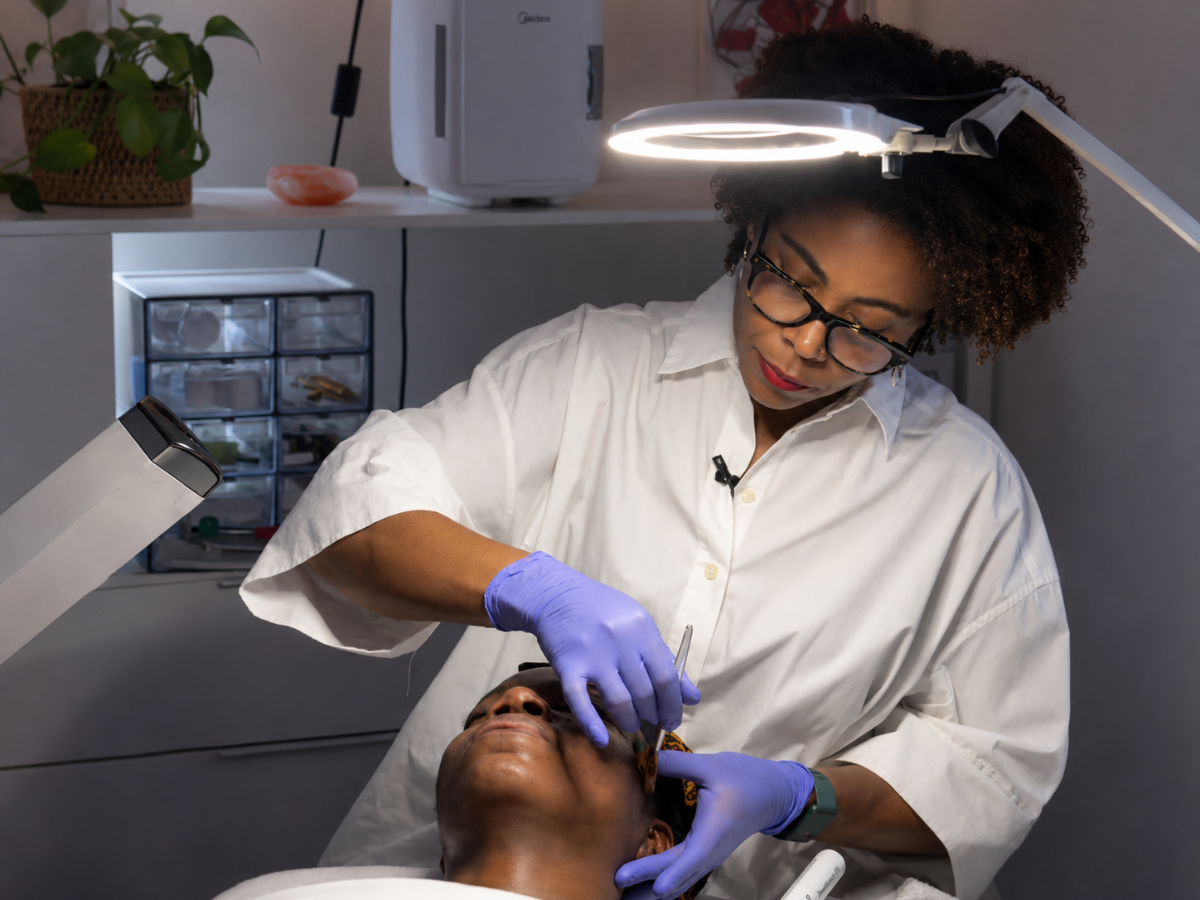
When you visit my Philadelphia studio, I look beyond the concern you want to improve.
I also consider:
My goal is not to treat melanin-rich skin as fragile or difficult.
It is to understand how your skin responds and make thoughtful treatment decisions with you.
You can learn more about my background and approach.
What Facial Is Best for Melanin-Rich Skin?
There is no single best facial for every person with skin of color.
The right treatment depends on what your skin is experiencing.
| Your Main Concern | Possible Starting Point |
| Unsure what your skin needs | Customized Facial |
| Dark spots / uneven tone | Hyperpigmentation Facial |
| Acne / congestion | Acne Facial |
| Dry or dehydrated skin | Hydrating Facial |
| Multiple ongoing concerns | Skin Focus Program |
If you are unsure where to begin, personalized treatment selection is usually the better starting point.
Your skin should not have to fit a treatment.
The treatment should fit your skin.
Skin of Color Care Near Rittenhouse Square
Viviane Aires Skin Wellness is located at:
255 S 17th St Suite 2407
Philadelphia, PA 19103
The studio welcomes clients from Rittenhouse Square, Center City, Fitler Square, Graduate Hospital, Washington Square West, Logan Square, University City, South Philadelphia, and nearby Philadelphia neighborhoods.
If you are searching for personalized skin of color care in Philadelphia, you do not need to know exactly which treatment to choose before your visit.
We can begin by understanding your skin first.

When Should You See a Dermatologist?
Professional esthetic care can support cosmetic skin concerns, but it does not replace medical diagnosis or treatment.
Consider seeing a dermatologist if you have:
Knowing when a concern needs medical evaluation is part of responsible skincare.
Frequently Asked Questions About Skin of Color
Does darker skin need different skincare?
Not always. Your skin type and concerns matter more than complexion alone, but melanin-rich skin may need more careful attention to irritation, inflammation, pigmentation, and treatment intensity.
Why do dark spots last longer on darker skin?
Inflammation may trigger additional melanin production, which can leave post-inflammatory hyperpigmentation after acne, irritation, or injury.
Can Black or Brown skin get chemical peels?
Yes, but peel type, strength, skin preparation, and professional assessment matter.
Is hyperpigmentation more common in skin of color?
Hyperpigmentation is a common concern in melanin-rich skin because inflammation may leave more noticeable pigmentation behind.
What facial is best for melanin-rich skin?
There is no one facial that is best for every darker skin tone. Treatment should be selected based on your skin condition, sensitivity, pigmentation history, and goals.
Can acne treatments make dark spots worse?
Some acne treatments may cause irritation or dryness if they are too strong for your skin. The goal is to manage acne without creating unnecessary inflammation.
Should skin of color avoid exfoliation?
No. The goal is not to avoid exfoliation, but to use an appropriate method and frequency.