
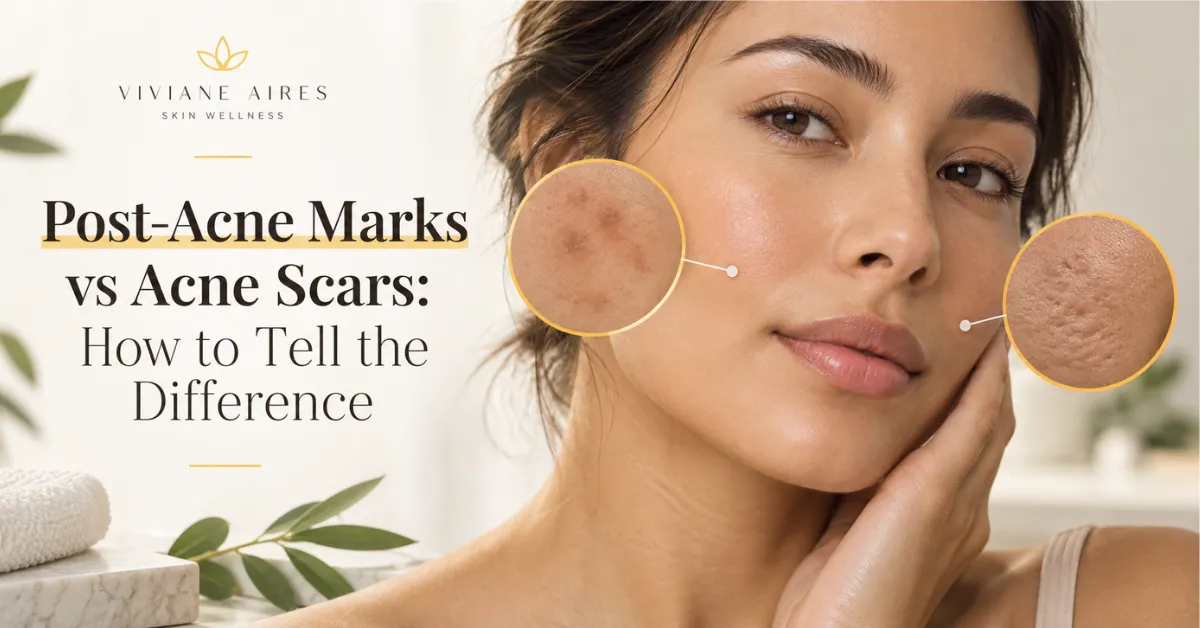
Post-Acne Marks vs Acne Scars: How to Tell the Difference
Post-acne marks are usually flat color changes left after a breakout, such as brown, red, purple, or darker spots. Acne scars usually change the skin’s texture, creating pits, dents, raised areas, or uneven surfaces. The difference matters because acne marks and acne scars often need different types of care.
If your breakout is gone but your skin still does not look clear, you may be wondering:
- Is this a dark mark?
- Is this a scar?
- Will it fade on its own?
- Do I need a facial, skincare, or a dermatologist?
At Viviane Aires Skin Wellness in Philadelphia, many acne-prone clients need support for both active breakouts and the marks they leave behind. This guide will help you understand the difference between post-acne marks and acne scars, so you can choose a better next step for your skin.

Acne Marks vs Acne Scars
The easiest way to tell the difference is this:
Post-acne marks are usually about color. Acne scars are usually about texture.
| Feature | Post-Acne Marks | Acne Scars |
| Main issue | Color change | Texture change |
| Skin surface | Usually flat | Indented, raised, or uneven |
| Common look | Brown, red, purple, or darker spots | Pits, dents, rolling texture, or raised areas |
| Cause | Inflammation after acne | Collagen changes during healing |
| Makeup coverage | Color may cover more easily | Texture may still show |
| Skin feel | Usually smooth | May feel uneven |
| Best starting point | Acne + pigmentation support | Professional assessment; may need advanced care |
The American Academy of Dermatology explains that post-inflammatory hyperpigmentation after acne appears as flat spots and is not the same as a true acne scar. True acne scars may be depressed or raised.
What Are Post-Acne Marks?
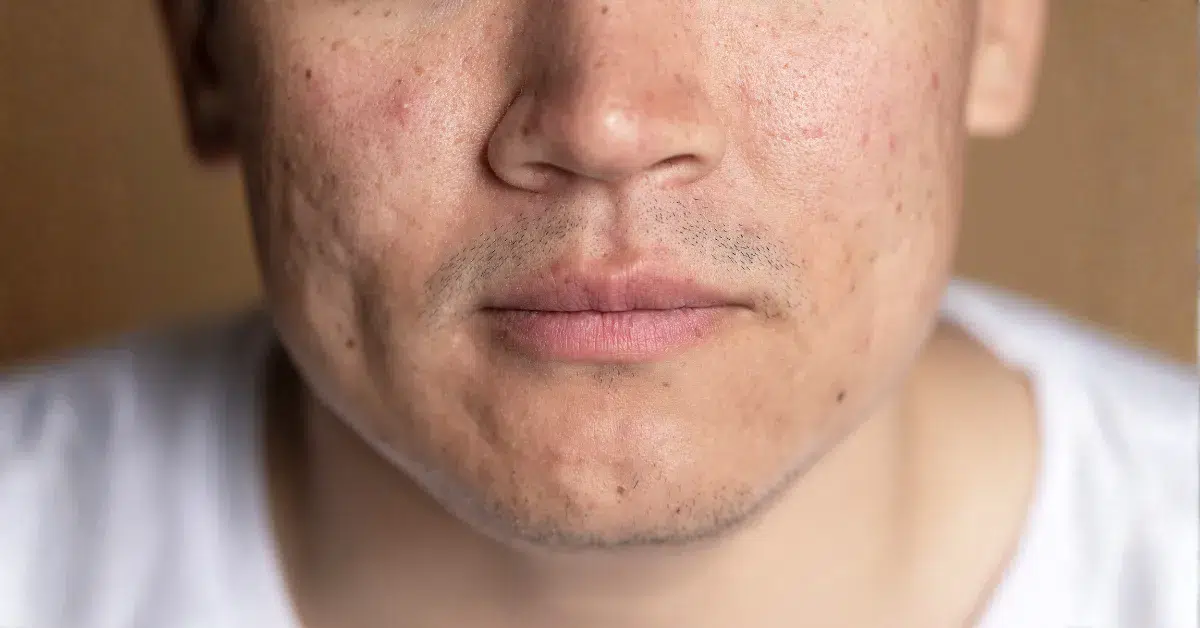
Post-acne marks are flat discoloration left after a breakout heals. They may look brown, tan, red, purple, or darker than your natural skin tone. Brown or darker marks are often linked with post-inflammatory hyperpigmentation, especially in deeper skin tones.
These marks are not always permanent scars.
They happen because inflammation from acne can leave pigment changes behind. This is common after pimples, cystic breakouts, picking, irritation, or repeated acne in the same area.
Post-acne marks may look like:
- Brown spots
- Red marks
- Purple marks
- Dark patches
- Flat discoloration
- Old breakout marks
- Uneven skin tone after acne
If your main concern is flat dark spots after breakouts, you may want to learn more about hyperpigmentation and dark spots.

What Are Acne Scars?
Acne scars are changes in the skin’s texture after acne heals. They may appear as dents, pits, raised areas, or uneven skin surfaces. True acne scars can form when the skin makes too little or too much collagen during the healing process.
Acne scars are different from flat dark marks because they affect the structure of the skin.
They may look like:
- Small pits
- Indented areas
- Rolling texture
- Boxcar-like dents
- Raised or thickened areas
- Uneven skin surface
- Texture that makeup does not fully hide
AAD notes that acne scars can appear sunken or raised after deeper acne heals, depending on how the skin repairs itself.
If your main concern is texture after acne, our guide to uneven skin texture may help you understand your options.
How to Tell If It’s a Mark or a Scar
You can often tell the difference by checking whether the area is flat or textured. If the skin feels smooth but has color, it is more likely a post-acne mark. If the area feels indented, raised, or uneven, it may be an acne scar.
Here are simple ways to check:
1. Look at the skin in natural light
If the area is only darker, red, purple, or brown, it may be a post-acne mark.
If it casts a shadow or looks like a dent, it may be a scar.
2. Touch the area gently
If it feels smooth, the concern is likely color.
If it feels uneven, dipped, or raised, texture may be involved.
3. Notice how makeup sits
Makeup may cover color changes better than texture changes.
If makeup covers the darkness but the dent still shows, it may be a scar.
4. Think about the breakout history
Deep, painful, inflamed acne has a higher risk of leaving scars. Picking or squeezing can also make marks and scars more likely.
Why Breakouts Leave Dark Marks
Breakouts can leave dark marks because inflammation may trigger extra pigment as the skin heals. This is especially common in melanin-rich skin and can become more noticeable with picking, irritation, sun exposure, or recurring acne.
This is why acne and pigmentation often need to be managed together.
If new breakouts keep forming, new marks may keep appearing. That means the first step is often calming the acne cycle before focusing only on fading the marks.
AAD notes that people with skin of color can be more likely to notice dark spots after acne and that treating acne early can help reduce the risk of dark spots and scars.
If you are still breaking out, start with the acne and breakouts pathway first.
Can Post-Acne Marks Fade?
Yes, post-acne marks can fade over time, but fading depends on your skin tone, inflammation level, sun exposure, picking, skincare routine, and whether new breakouts keep happening. Consistent acne control, sunscreen, and pigment-safe care are usually important.
Flat marks often need patience.
They may take weeks or months to look lighter. If the skin keeps breaking out, the fading process becomes harder because new marks keep forming.
Helpful support may include:
- Consistent acne care
- Daily sunscreen
- Gentle exfoliation when appropriate
- Barrier support
- Avoiding picking
- Pigment-safe professional treatments
- A routine that does not irritate the skin
If dark marks are your main concern, a hyperpigmentation facial in Philadelphia may be a better starting point than harsh at-home fading products.
Can Acne Scars Go Away?
True acne scars usually do not fade the same way flat marks do because the skin texture has changed. Some scars may improve with professional treatments, but deeper, raised, or textured scars may need dermatology-level care.
This is an important expectation.
A dark mark may fade as pigment calms. A scar is different because the surface of the skin has changed.
For mild texture concerns, esthetic treatments may support smoother-looking skin over time. For deep pitted scars, raised scars, keloids, or severe scarring, a dermatologist is the better professional to evaluate treatment options. Mayo Clinic also notes that severe or persistent acne can cause scarring and may need medical care from a skin specialist.
Viviane Aires Skin Wellness provides esthetic skin care and does not diagnose or treat medical conditions.
What Can Help Acne Marks and Scars?
The best support depends on whether you have active acne, flat discoloration, uneven texture, or true scarring. Acne marks often need acne control and pigmentation support. Acne scars may need texture-focused care or dermatologist evaluation.
| If You Notice… | Better Starting Point |
| Active breakouts | Acne & Breakouts pathway |
| Flat dark marks | Hyperpigmentation support |
| Red or inflamed acne | LED Light Therapy for Acne |
| Uneven texture after acne | Texture-focused facial guidance |
| Deeper dents or raised scars | Dermatologist assessment |
| Multiple concerns | Skin Focus Program |
At Viviane Aires Skin Wellness, acne-prone skin is not treated with a one-size-fits-all routine.
Your skin may need acne support first. Or it may need dark spot care, hydration, barrier repair, LED support, or a longer corrective plan.
For active breakouts, an acne facial in Philadelphia may help support clearer-looking skin.
For red or inflamed-looking breakouts, LED light therapy for acne may be recommended as part of your acne support plan.
For longer-term acne, pigmentation, and texture concerns, the Skin Focus Program may offer more structured support.
When to See a Dermatologist
You should see a dermatologist if acne is painful, severe, sudden, spreading, leaving deep scars, or not improving with consistent care. You should also seek medical guidance for raised scars, keloids, or any new, changing, itching, or bleeding skin spots.
This matters because acne marks and acne scars do not always need the same type of care.
A dermatologist may be needed for:
- Painful cystic acne
- Deep pitted acne scars
- Raised or thickened scars
- Keloid-prone skin
- Severe inflammation
- Sudden acne changes
- Scarring that affects confidence
- Medical acne treatment needs
Esthetic care can support skin comfort, routine guidance, acne-prone skin, dark marks, and smoother-looking skin, but medical diagnosis and scar treatment should come from the right medical provider.
Post-Acne Mark Support Near Rittenhouse Square
Viviane Aires Skin Wellness is located at:
255 S 17th St Suite 2407
Philadelphia, PA 19103
Our studio is near Rittenhouse Square and Center City Philadelphia.
We welcome clients from nearby areas including:
- Rittenhouse Square
- Center City Philadelphia
- Fitler Square
- Graduate Hospital
- Washington Square West
- Logan Square
- University City
- South Philadelphia
If you are searching for post-acne mark support, acne facial care, or hyperpigmentation support in Philadelphia, Viviane offers personalized care in a calm, private, esthetician-led studio.
Why Choose Viviane Aires Skin Wellness?
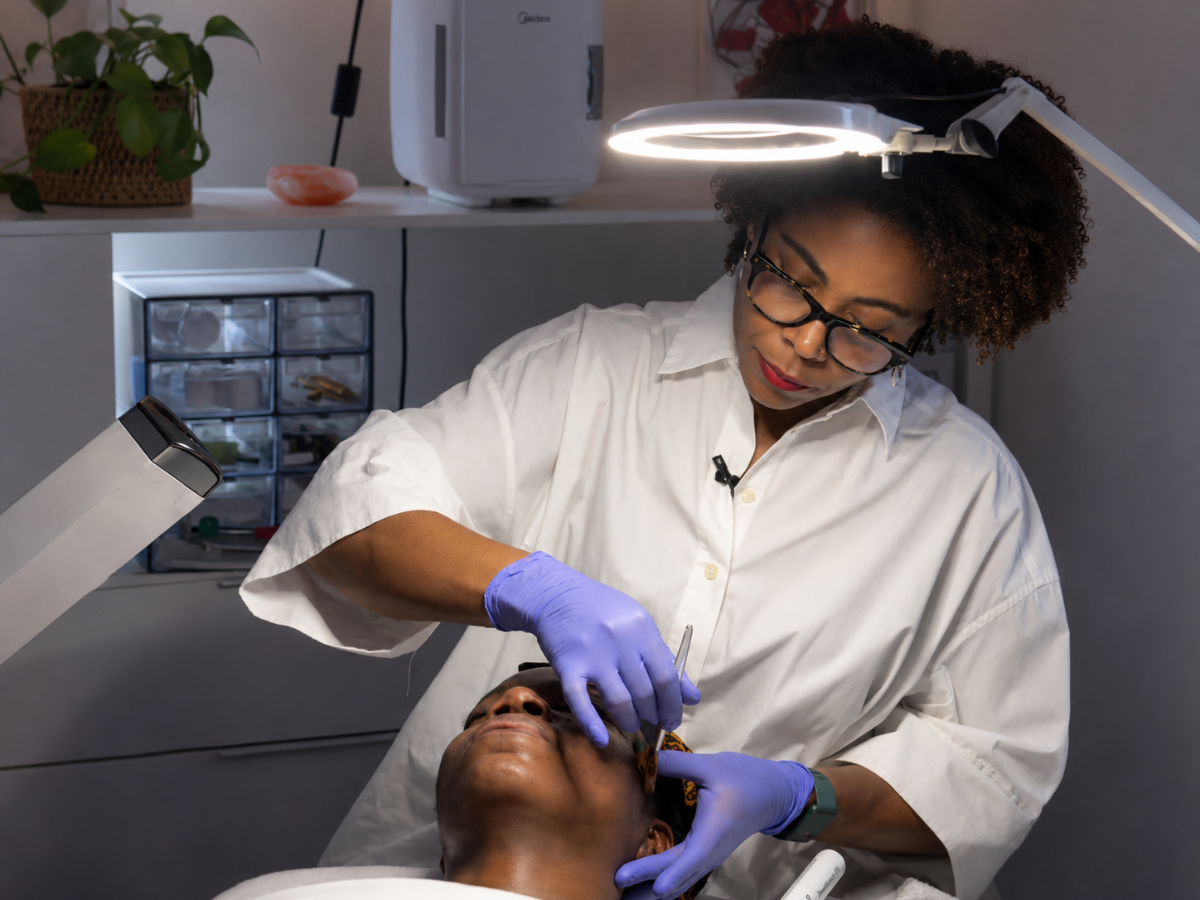
Viviane Aires Skin Wellness supports acne-prone and pigmentation-prone skin with personalized, esthetician-led care. The goal is to understand whether your concern is active acne, flat discoloration, texture, sensitivity, or a combination of concerns before recommending the next step.
This matters because treating everything like “acne scars” can lead to the wrong approach.
A flat dark mark may need brightening and pigment-safe care.
A textured scar may need a different conversation.
Active acne may need calming and clearing support first.
Clients choose Viviane’s approach because it is:
- Personalized to your skin condition
- Supportive of acne-prone skin
- Thoughtful for melanin-rich skin
- Barrier-conscious
- Education-first
- Calm and professional
- Realistic about results
- Focused on long-term skin wellness
The goal is not to overwhelm your skin with aggressive treatments.
The goal is to guide you toward the right support at the right time.
Ready to Understand What Your Skin Needs?
If your breakouts have left dark marks, uneven tone, or texture, you do not have to guess whether it is a mark or a scar.
At Viviane Aires Skin Wellness, your care is personalized based on your acne pattern, pigmentation, sensitivity, texture, skin tone, and long-term goals.
Start with the right support for calmer, clearer-looking skin.
Post-Acne Marks vs Acne Scars FAQs
Are post-acne marks the same as acne scars?
No. Post-acne marks are usually flat color changes left after breakouts, while acne scars usually affect skin texture through dents, pits, raised areas, or uneven surface.
How do I know if acne left a mark or a scar?
Check whether the area is flat or textured. If it is flat and only discolored, it is likely a post-acne mark. If it feels indented, raised, or uneven, it may be an acne scar.
Do acne marks go away?
Yes, acne marks can fade over time, but fading depends on your skin tone, inflammation, sun exposure, picking, and whether new breakouts continue.
Do acne scars go away?
True acne scars usually do not fade like flat marks because the skin texture has changed. Some scars may improve, but deeper scars may need dermatologist-level care.
Why do pimples leave dark spots?
Pimples can leave dark spots because inflammation may trigger extra pigment as the skin heals. Picking, sun exposure, and repeated breakouts can make marks more noticeable.
Can picking acne cause scars?
Yes. Picking acne can increase inflammation and skin injury, which may raise the risk of dark marks, infection, and scarring.